Can Weight-Loss Drugs Like Ozempic Help With Sleep Apnea?
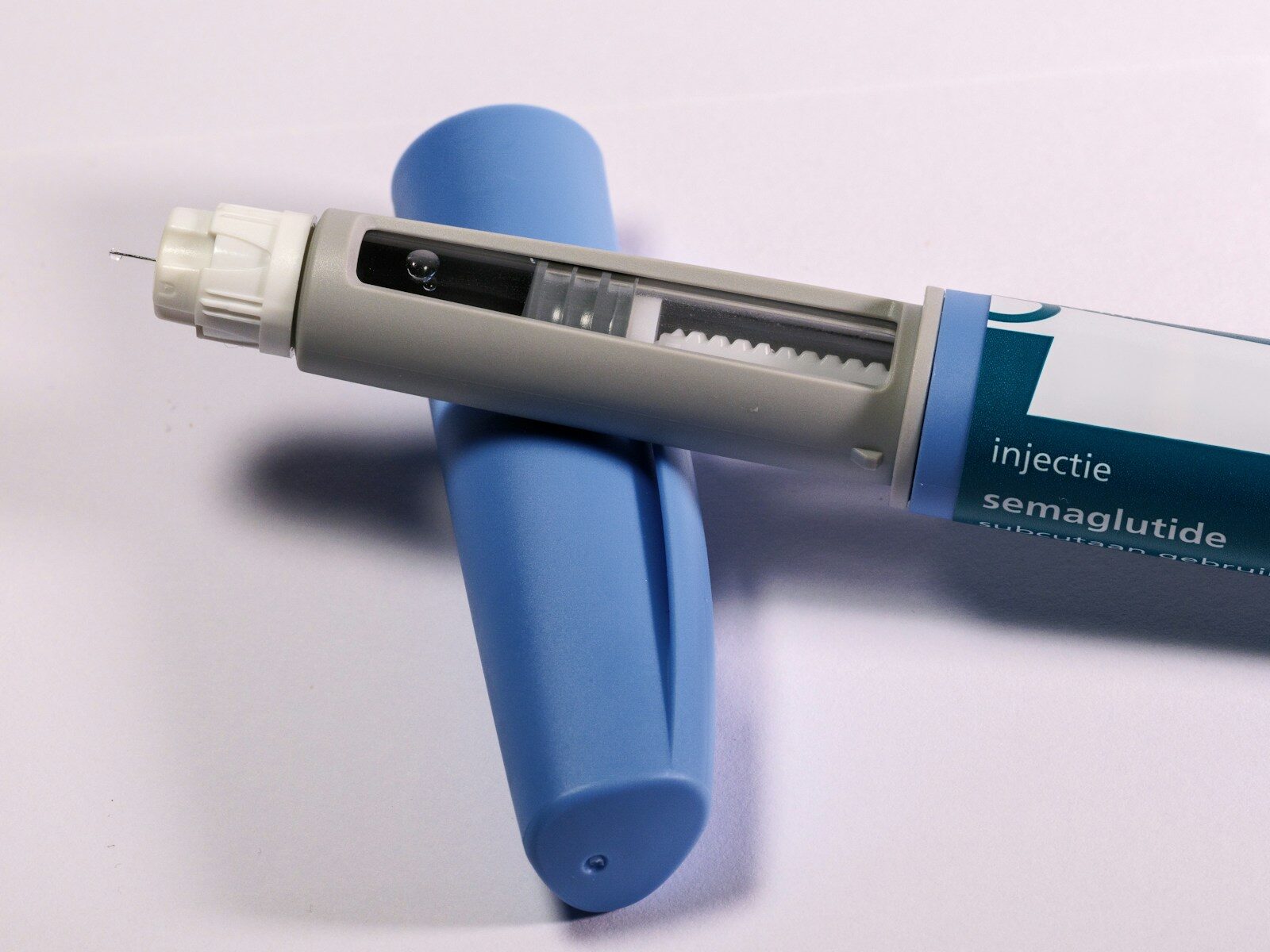
If you take Ozempic, Wegovy, or Zepbound for weight loss or diabetes, you may have noticed something unexpected: you’re sleeping better. That’s not a coincidence, and researchers are now taking a hard look at why.
A wave of clinical studies published in 2025 and 2026 has found that GLP-1 receptor agonists — the drug class behind Ozempic, Wegovy, Mounjaro, and Zepbound — significantly reduce the severity of obstructive sleep apnea (OSA) in people with obesity. The findings are reshaping how sleep specialists think about treatment, though they don’t change the first-line recommendation: if you have sleep apnea, you need a proper evaluation and a treatment plan built for your specific case.
What Are GLP-1 Drugs, and What Do They Do?
GLP-1 stands for glucagon-like peptide-1. These drugs work by mimicking a hormone your body naturally produces after eating — one that signals fullness, slows digestion, and helps regulate blood sugar. The most widely known are semaglutide (sold as Ozempic for diabetes and Wegovy for weight loss) and tirzepatide (Mounjaro and Zepbound), which targets both GLP-1 and a second hormone called GIP.
Originally developed for type 2 diabetes, these medications have gained widespread attention for producing substantial weight loss — often 15 to 20 percent of body weight over a year of treatment. That level of weight loss has downstream effects on the body, including on the upper airway.
Why Weight Loss Matters for Sleep Apnea
Obstructive sleep apnea occurs when the muscles and soft tissue of the throat relax during sleep, causing the airway to collapse and briefly interrupt breathing — sometimes hundreds of times a night. It’s a more common condition than most people expect, and it doesn’t only affect people who are overweight. As we’ve written about previously, anatomy, jaw structure, and other factors also play a role.
That said, excess weight — particularly fatty tissue deposited around the neck, tongue, and throat — increases the mechanical pressure on the airway and makes collapse more likely. For people whose sleep apnea is driven primarily by obesity, meaningful weight loss can reduce that pressure and allow the airway to stay open more consistently during sleep. This is not a new observation. What’s new is the scale of the effect being seen with GLP-1 drugs and the growing body of controlled trial data behind it.
What the Research Shows
The most significant data comes from the SURMOUNT-OSA trials, two randomized, placebo-controlled studies involving 469 patients with moderate-to-severe obstructive sleep apnea. Participants treated with tirzepatide saw reductions in their apnea-hypopnea index (AHI) — the standard measure of sleep apnea severity — of 25.3 and 29.3 events per hour, compared to reductions of around 5 events per hour in the placebo groups. That represents roughly a 50 to 59 percent reduction in AHI, accompanied by average weight loss of 17 to 20 percent [1].
A 2025 meta-analysis in ERJ Open Research pooled results across trials and found GLP-1 drugs and tirzepatide together produced a mean AHI reduction of nearly 22 events per hour, with tirzepatide outperforming other agents in the class [2]. A separate review confirmed that benefits were more pronounced in patients with obesity and severe OSA, and were observed whether or not patients were also using CPAP [3].
A large observational study published in JAMA Network Open in December 2025 analyzed records from more than 93,000 patients with obesity, type 2 diabetes, and sleep apnea who were prescribed a GLP-1 drug. Those patients were less likely to need CPAP, less likely to be hospitalized, and 32 percent less likely to die from any cause compared to patients on other diabetes medications [4].
Is It Just the Weight Loss?
Probably not entirely. Researchers have noted that some patients show improvements in sleep apnea beyond what weight loss alone would predict. GLP-1 receptors are present in the brainstem, where breathing is regulated, and there may be direct effects on respiratory drive and upper airway muscle tone. A 2026 review in Frontiers in Medicine noted that tirzepatide also reduced systemic inflammation — measured by high-sensitivity C-reactive protein — which contributes to airway swelling and instability [5].
The mechanism question is still open. What researchers agree on is that the effects are real and clinically meaningful.
What This Doesn’t Mean
GLP-1 drugs are not a replacement for sleep apnea evaluation or treatment. Sleep apnea is diagnosed through a sleep study, not by symptoms alone, and its severity varies enormously between patients. CPAP remains the most effective first-line treatment for most people with moderate to severe OSA — the lead researcher behind the JAMA Network Open study was explicit that CPAP should still be the standard of care.
These medications also come with significant costs, side effects, and prescribing criteria. They are not appropriate for everyone with sleep apnea, and outside of tirzepatide — which received FDA approval specifically for OSA in adults with obesity in 2024 — they are not indicated for sleep apnea on their own.
If you’re already on a GLP-1 drug and think your sleep has improved, that’s worth discussing with a sleep physician. A follow-up sleep study can tell you whether your AHI has changed enough to modify your treatment plan.
What Sleep Specialists Are Watching
The picture is still developing. Longer-term studies will be needed to understand whether the improvements hold after the first year, what happens if patients discontinue the medication, and which patients benefit most. A September 2026 review in JAMA Otolaryngology concluded that GLP-1s are best positioned as complementary therapy alongside CPAP, as preoperative optimization before upper airway surgery, or to expand candidacy for hypoglossal nerve stimulation — not as a standalone replacement for established treatments [6].
If you’ve been told you’re at risk for sleep apnea or have symptoms you haven’t had evaluated, the path forward hasn’t changed: a sleep study is still the right first step. Our Maryland sleep apnea specialists can evaluate your symptoms and recommend the right diagnostic path. Diet, medications, and good sleep habits all support better outcomes, but none of them replace a diagnosis.
References:
- Malhotra A, Grunstein RR, Fietze I, et al. Tirzepatide for the Treatment of Obstructive Sleep Apnea and Obesity. N Engl J Med. 2024;391(13):1193-1205. https://doi.org/10.1056/NEJMoa2404881
- Chahine M, et al. Safety and efficacy of GLP-1 receptor agonists in OSA: a systematic review and meta-analysis. ERJ Open Research. 2025. https://doi.org/10.1080/20018525.2025.2484048
- Harris A, Kaffenberger T. GLP-1 Receptor Agonists for Obstructive Sleep Apnea: A Review. JAMA Otolaryngol Head Neck Surg. Published online September 3, 2026. https://doi.org/10.1001/jamaoto.2026.2266
- Tang H, Zhang B, Lu Y, et al. Incretin Receptor Agonists and CPAP Use in Adults With Diabetes, Obesity, and Obstructive Sleep Apnea. JAMA Netw Open. 2025;8(12):e2550978. https://doi.org/10.1001/jamanetworkopen.2025.50978
- Frontiers in Medicine. GLP-1/GIP dual agonist tirzepatide in obstructive sleep apnea syndrome: mechanisms, evidence, and clinical perspectives. 2026. https://doi.org/10.3389/fmed.2026.1752341
- Harris A, Kaffenberger T. GLP-1 Receptor Agonists for Obstructive Sleep Apnea: A Review. JAMA Otolaryngol Head Neck Surg. Published online September 3, 2026. https://doi.org/10.1001/jamaoto.2026.2266
Ready to sleep better?
Good sleep hygiene is a foundation, not a cure-all. If you’re following these tips and still can’t sleep, wake up exhausted, or experience daytime sleepiness, you might have a sleep disorder.
That’s where we come in.
At the Center for Sleep & Wake Disorders, we have been diagnosing and treating the full range of sleep conditions—from insomnia to sleep apnea to narcolepsy—in the DC area since 1995. Our board-certified, AASM-accredited physicians use in-lab sleep studies to identify what’s really going on, then create a personalized treatment plan to help you get the sleep you deserve.
Disclaimer: This content is for general information only and is not medical advice. Always consult your physician for diagnosis or treatment.