
Narcolepsy Specialists

Serving Washington D.C., Virginia and Maryland

Sleep problems deserve medical expertise. At the Center for Sleep & Wake Disorders, our board-certified sleep medicine physicians comprehensively diagnose your sleep issues using the latest tools in sleep science and technology. We have clinics in both Chevy Chase, MD and Bowie, MD.

Our in-lab sleep studies use medically-grade monitoring equipment and trained sleep technologists to observe and record every aspect of your sleep. This allows us to identify the exact cause of your symptoms and design a treatment plan backed by evidence, not guesswork.

woman standing near window during daytime
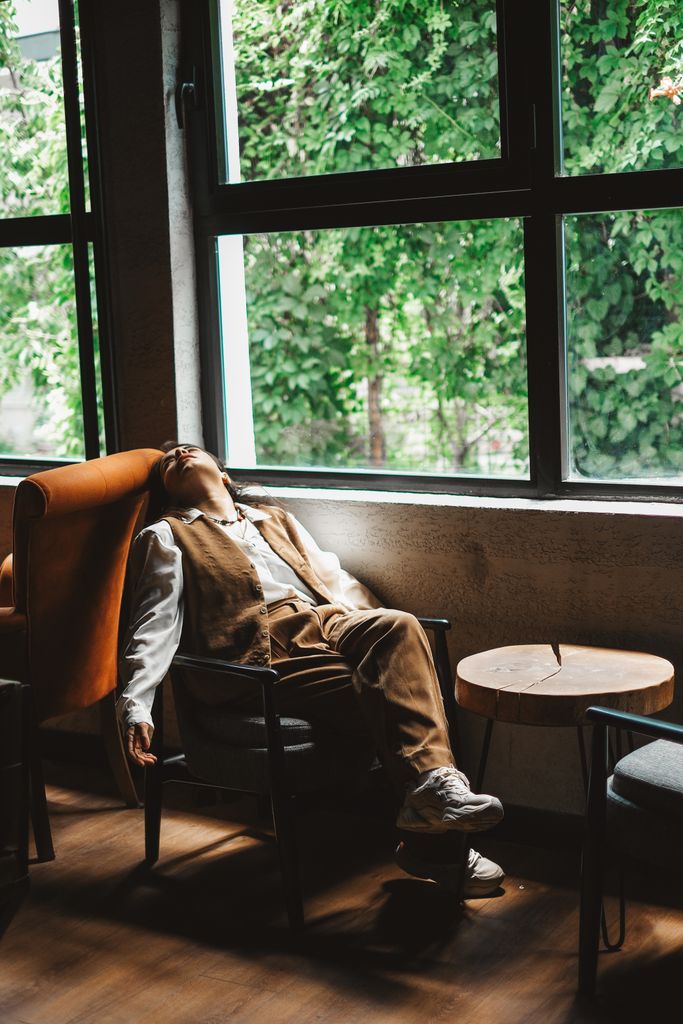
A person rests comfortably by a window in a cozy café, enjoying the serene view of greenery outside.

Do You Have Narcolepsy?

Narcolepsy is a chronic neurological disorder in which the brain loses its ability to regulate the sleep-wake cycle normally. The result is daytime tiredness and the breakdown of the boundary between sleep and wakefulness, regardless of how much sleep you got the night before.

The most recognized symptom is sudden, uncontrollable sleep attacks during the day, but narcolepsy often presents with symptoms patients don’t connect to a sleep disorder at all:

  • Sudden muscle weakness triggered by strong emotions (cataplexy)
  • Vivid, often frightening hallucinations when falling asleep or waking up
  • Inability to move or speak briefly upon waking (sleep paralysis)
  • Fragmented nighttime sleep with frequent awakenings
  • Excessive daytime sleepiness regardless of sleep duration
  • Automatic behaviors (completing routine tasks with no memory of doing them)
  • Difficulty concentrating or memory lapses
  • Irritability or mood changes

If you experience several of these symptoms consistently, a narcolepsy evaluation is warranted. Many patients who come to us have been living with unexplained exhaustion or dismissed as lazy or depressed for years before receiving an accurate diagnosis. Narcolepsy is a neurological condition, and it responds well to proper treatment.

Diagnosing Narcolepsy

A confirmed narcolepsy diagnosis requires specialized sleep testing that goes beyond a standard sleep study. Our sleep medicine physicians will evaluate your symptoms, medical history, and sleep patterns before recommending the appropriate diagnostic path.

Multiple Sleep Latency Test (MSLT)

A woman resting on a bed indoors, expressing relaxation and tiredness.

The MSLT is the definitive test for narcolepsy. Conducted the morning after your overnight PSG, it measures how quickly you fall asleep across five scheduled nap opportunities and whether you enter REM sleep abnormally fast. A mean sleep latency of eight minutes or less, combined with REM sleep appearing in two or more naps, is the diagnostic marker for narcolepsy. No at-home test can replicate this — narcolepsy diagnosis requires an in-lab study.

In-Lab Sleep Study (Polysomnogram)
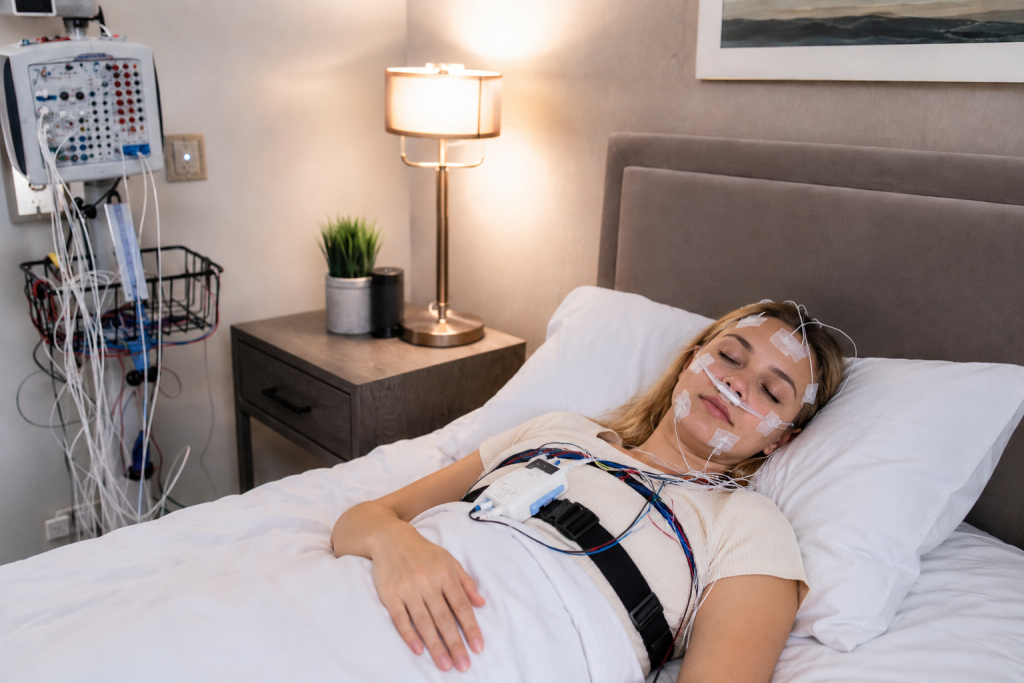
The diagnostic process typically begins with an overnight polysomnography (PSG) at our AASM-accredited sleep labs in Chevy Chase or Bowie. This rules out other sleep disorders — particularly sleep apnea, which can mimic narcolepsy symptoms — and documents the fragmented nighttime sleep patterns common in narcolepsy.

Narcolepsy Treatment Options

woman spreading her arms

Narcolepsy is considered a lifelong condition, but symptoms are manageable. The right approach depends on which symptoms are most disruptive and how they affect daily functioning. Our sleep physicians work through the options with you to build a plan that controls symptoms without compromising quality of life.

  • Stimulant medications — The primary treatment for excessive daytime sleepiness. Modafinil and armodafinil are typically first-line. Amphetamine-based stimulants are used when response is inadequate. Pitolisant and solriamfetol are newer options with different mechanisms.
  • Sodium oxybate (Xyrem / Lumryz) — Taken at night, sodium oxybate consolidates nighttime sleep and reduces both daytime sleepiness and cataplexy. It is the only medication that addresses the full symptom spectrum and is considered highly effective for narcolepsy type 1.
  • Antidepressants for cataplexy — SNRIs and SSRIs suppress REM sleep and reduce cataplexy episodes, hallucinations, and sleep paralysis. Used at lower doses than for depression. Venlafaxine is commonly prescribed.
  • Scheduled naps — Two or three brief planned naps during the day can meaningfully reduce sleep pressure and improve alertness. Often used alongside medication rather than instead of it.
  • Behavioral and lifestyle strategies — Consistent sleep and wake times, avoiding alcohol and heavy meals before sleep, and safety planning for driving and occupational risk are part of comprehensive care.

Why Choose the Center for Sleep & Wake Disorders?
  • Board-certified sleep apnea physicians. Our physicians are board-certified in sleep medicine and focused exclusively on sleep disorders. Sleep is not a side practice — it is the entire practice.
  • AASM-accredited sleep labs. Both our Chevy Chase and Bowie sleep labs are accredited by the American Academy of Sleep Medicine, the standard of quality in sleep medicine.
  • Operating since 1995. The Center for Sleep & Wake Disorders has been serving the Washington, DC metropolitan area for over 30 years. We have diagnosed and treated thousands of patients with obstructive sleep apnea and related conditions.
  • Full-spectrum care. From initial evaluation through diagnostic testing, treatment initiation, and long-term follow-up, we manage the complete arc of sleep apnea care — not just the study.
Schedule a Sleep Evaluation

Our Maryland Sleep Clinics

  • Chevy Chase MD Sleep Clinic
  • 5454 Wisconsin Ave, Suite 1335 Chevy Chase, MD 20815
  • Monday – Friday | 8:30 AM – 4:30 PM
  • 301-654-1575
  • Bowie MD Sleep Clinic
  • 4000 Mitchellville Rd, Suite B218 Bowie, MD 20716
  • Monday – Friday | 8:30 AM – 4:30 PM
  • 301-654-1575