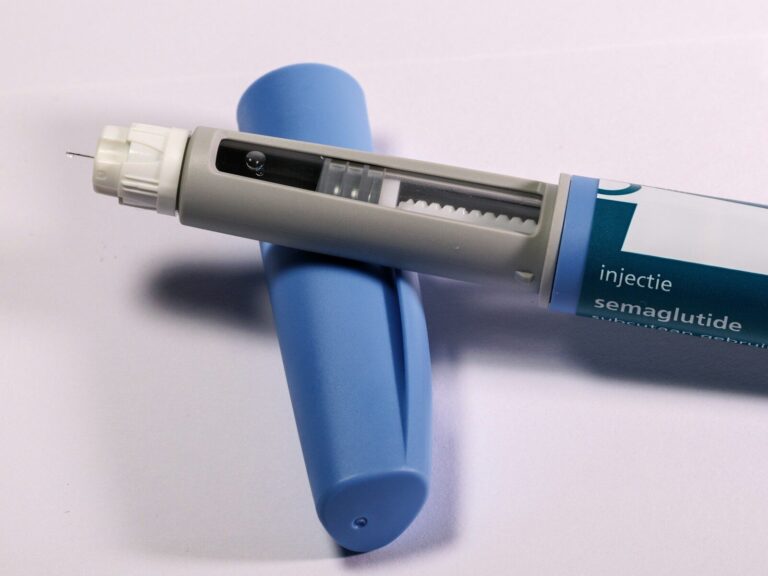
Can You Drive If You Have Narcolepsy in Maryland?

Yes — many people with narcolepsy do drive. But in Maryland, a diagnosis changes your legal obligations, and what happens next depends on how well your symptoms are controlled and what the MVA determines about your case.
What Maryland law requires
Maryland law requires drivers to notify the Motor Vehicle Administration if they are diagnosed with narcolepsy. This is not optional. Under COMAR 11.17.03.02-1, narcolepsy is explicitly listed alongside epilepsy, stroke, and other conditions that must be reported to the MVA either at the time of diagnosis or when applying for or renewing a driver’s license.
You can self-report through the MVA’s Driver Wellness and Safety Division by phone, in person at any MVA branch, or through the myMVA portal. Your physician can also refer you voluntarily using the MVA’s provider referral form (DC-220).
Reporting does not automatically mean losing your license. After you report, the MVA may send you forms to complete, including a physician’s report (DC-119) for your doctor to fill out. Cases can be referred to the Medical Advisory Board, a panel of physicians who advise the MVA on driving fitness. The MVA then decides whether to allow you to continue driving without restriction, impose conditions, or suspend your privileges — and each case is reviewed individually.
How long do you have to be symptom-free before driving with narcolepsy in Maryland?
Maryland has a specific licensing guideline for narcolepsy. Under COMAR 11.17.03.04(F), a person being treated for narcolepsy may not be considered for any class of driver’s license until they have been free of symptoms for at least six months and are experiencing no side effects from their medication. The regulation also requires clearance by the Medical Advisory Board.
This means reporting a diagnosis does not permanently end your ability to drive — but returning to driving requires meeting Maryland’s published medical standard, not just a physician’s note saying you feel better.
Why the safety stakes are real
The reporting requirement exists because research has consistently raised concerns about driving risk in people with narcolepsy, particularly when excessive daytime sleepiness is not adequately controlled. Sleepiness impairs attention and reaction time in ways that are difficult to self-assess accurately. People with narcolepsy type 1 also face the possibility of cataplexy — sudden muscle weakness triggered by strong emotion — which can occur without warning behind the wheel.
A federal evidence review commissioned by the Department of Transportation found that drivers with narcolepsy face substantially elevated crash risk compared to drivers without the condition, based on both direct crash studies and driving simulation research.[1] The risk is highest when symptoms are untreated or undertreated.
What changes when narcolepsy is treated
Treatment matters for driving fitness. Wakefulness-promoting medications, combined with scheduled naps and consistent sleep timing, can bring daytime alertness much closer to normal for many patients. The same evidence base that documents elevated crash risk also finds that medications that reduce excessive daytime sleepiness appear to lower driving risk — though the evidence on crash reduction specifically is not as strong as the evidence on symptom control.
Practical risk reduction also involves behavioral strategies: not driving during periods of high sleepiness, avoiding long solo highway drives, planning trips around scheduled nap times, and having a clear plan if symptoms emerge. Many patients with well-managed narcolepsy drive successfully and maintain their licenses in Maryland.
If you haven’t been diagnosed yet
Driving with uncontrolled narcolepsy symptoms — before diagnosis and treatment — carries the full safety risk without any of the monitoring or management that makes driving viable. If you’ve been experiencing sudden daytime sleepiness, difficulty staying alert behind the wheel, or episodes of muscle weakness, the responsible step is evaluation before the question becomes legal. If you’re not sure whether what you’re experiencing is narcolepsy, understanding why the condition is so often missed is a useful starting point.
A narcolepsy evaluation at the Center for Sleep & Wake Disorders typically includes an overnight sleep study followed by a Multiple Sleep Latency Test — the standard diagnostic workup, and also the starting point for any MVA medical review. A confirmed diagnosis is not the problem. It’s the path to managing your health and your driving status on solid ground.
References
- Header photo by Harrison Plouzek via Unsplash.
- Federal Motor Carrier Safety Administration. Narcolepsy and Commercial Motor Vehicle Driver Safety: Findings of Evidence Report. U.S. Department of Transportation; 2009. https://www.fmcsa.dot.gov/sites/fmcsa.dot.gov/files/docs/Narcolepsy_CMV_Driver_Safety_1042010.pdf
- Maryland Motor Vehicle Administration. Medical Condition Disclosure. COMAR 11.17.03.02-1. https://mva.maryland.gov/your-mva-guide/medical-vision-requirements-licenses/medical-condition-disclosure
- Maryland Code of Regulations. Medical Advisory Board Guidelines — Narcolepsy. COMAR 11.17.03.04(F). https://regs.maryland.gov/us/md/exec/comar/11.17.03.04
Ready to sleep better?
Good sleep hygiene is a foundation, not a cure-all. If you’re following these tips and still can’t sleep, wake up exhausted, or experience daytime sleepiness, you might have a sleep disorder.
That’s where we come in.
At the Center for Sleep & Wake Disorders, we have been diagnosing and treating the full range of sleep conditions—from insomnia to sleep apnea to narcolepsy—in the DC area since 1995. Our board-certified, AASM-accredited physicians use in-lab sleep studies to identify what’s really going on, then create a personalized treatment plan to help you get the sleep you deserve.
Disclaimer: This content is for general information only and is not medical advice. Always consult your physician for diagnosis or treatment.